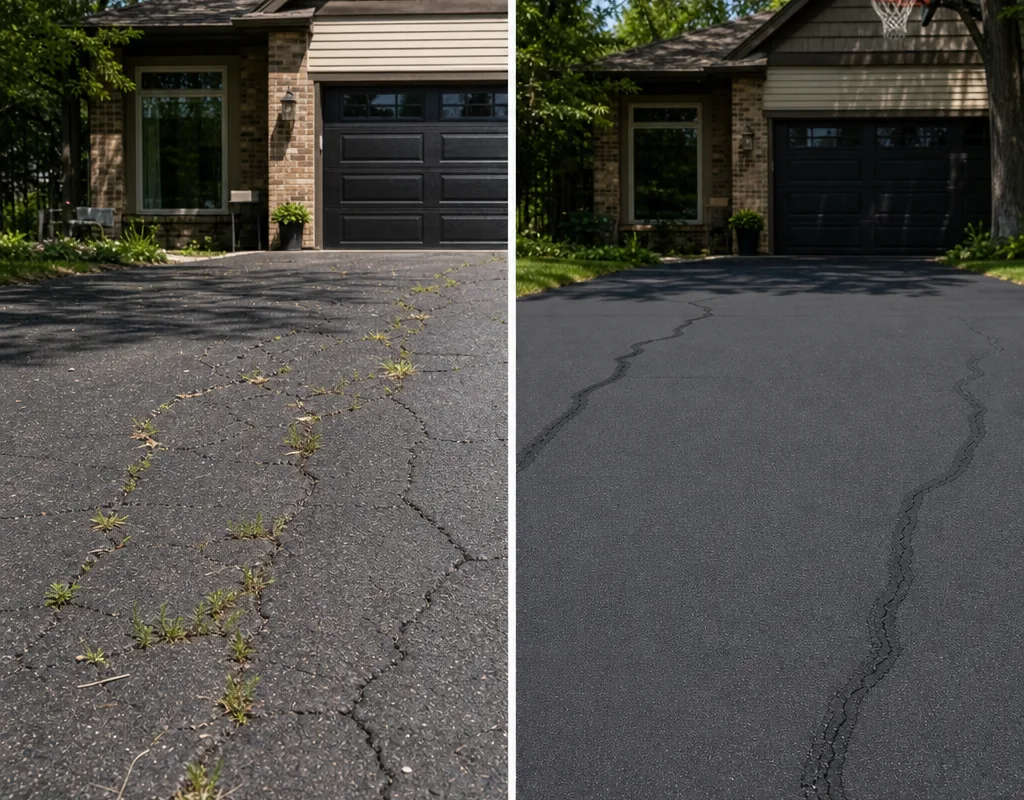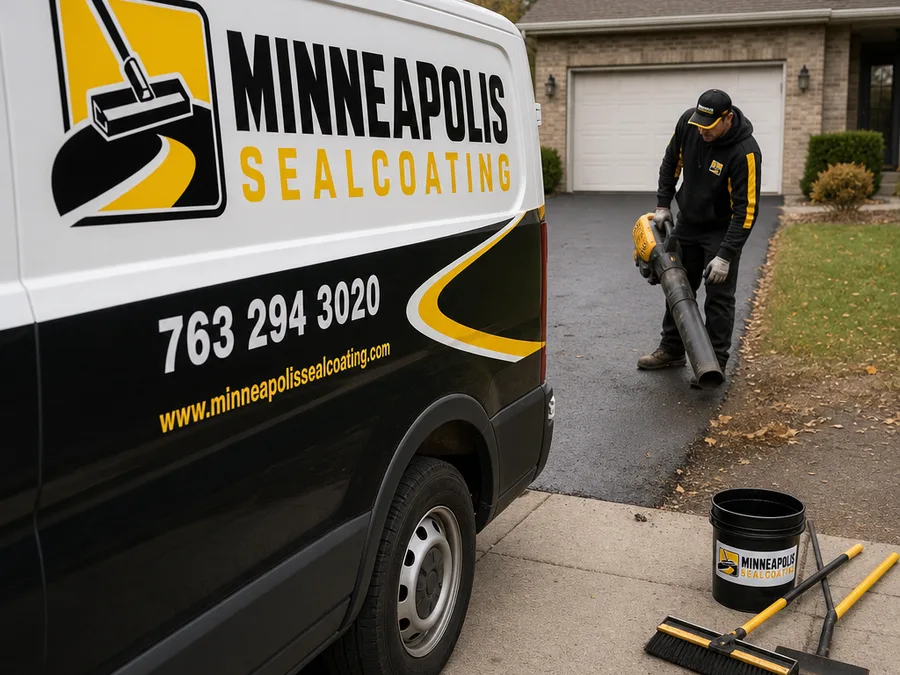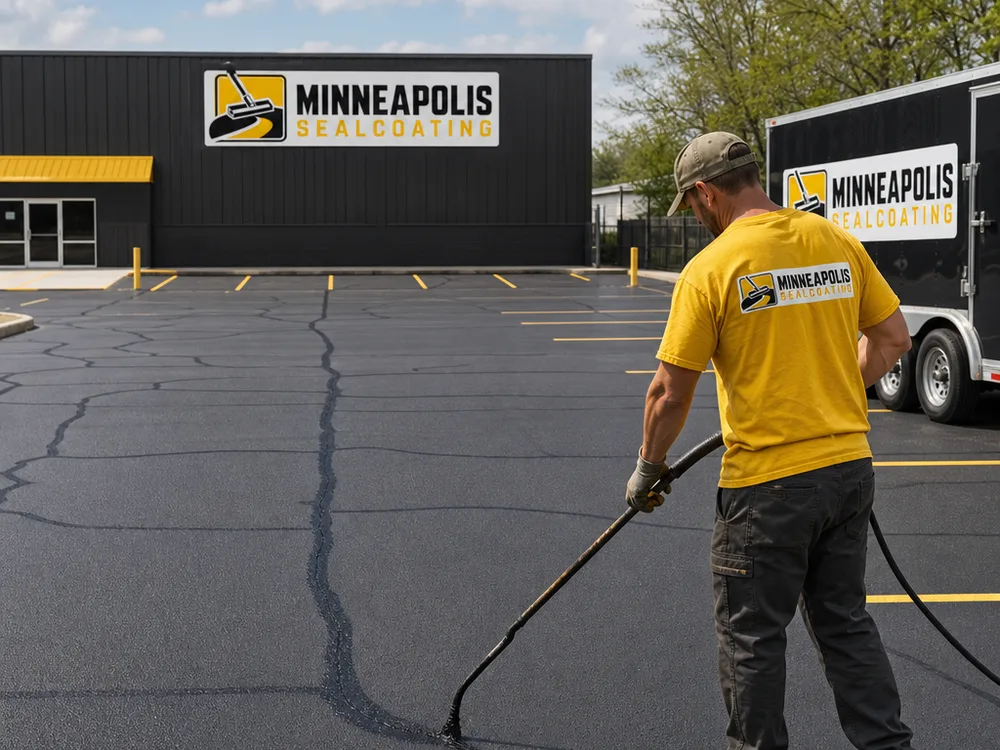
Clean prep, not cover-up
Crack repairs fail when dirt and fines stay in the joint. We focus on cleaning and drying so the material bonds to asphalt instead of debris.
Serving Minneapolis, Minnesota & surrounding areas
Mon–Fri 8am–6pm · Sat 9am–2pm
Keep water out of your asphalt before freeze-thaw turns small cracks into potholes. Get a clear scope, the right material for the crack type, and a clean finish that holds up through Minnesota seasons.
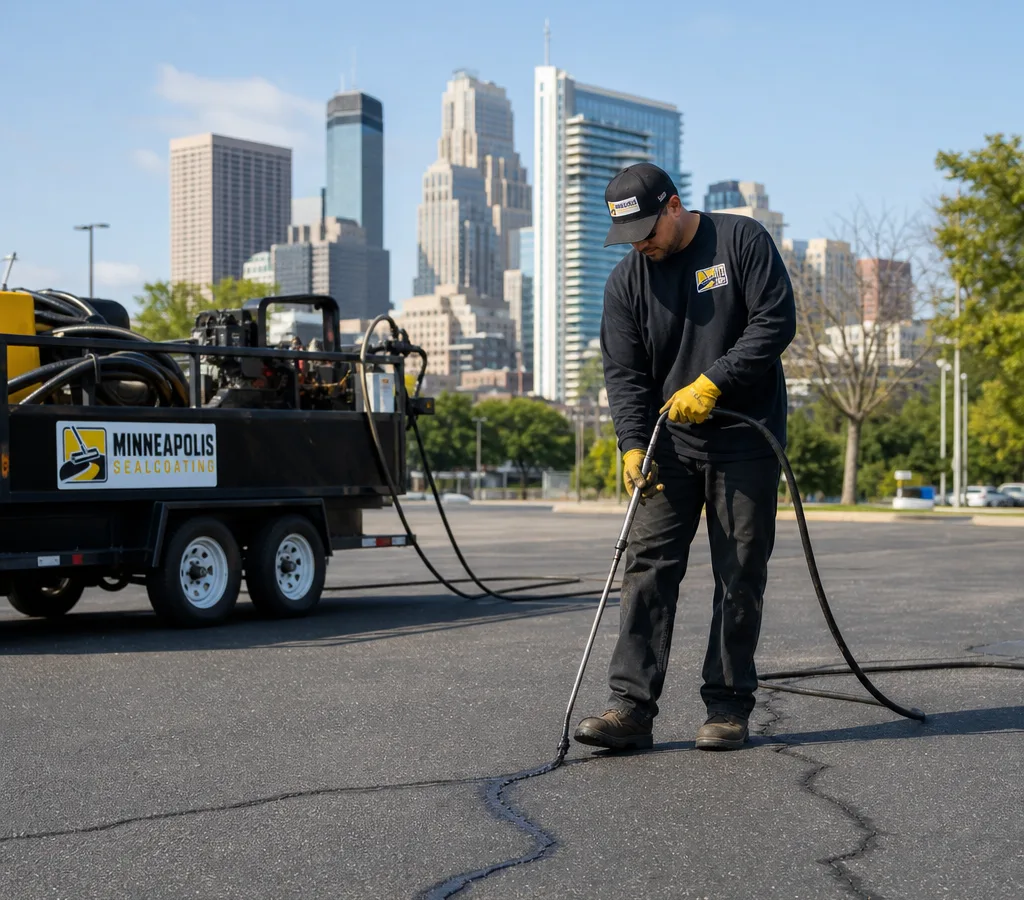
Crack filling Minneapolis property owners book is rarely about looks alone. The real goal is stopping water intrusion. Once water gets into a crack, it reaches the base, weakens support under the asphalt, and winter freeze-thaw does the rest.
Minneapolis Sealcoating provides asphalt crack filling and crack sealing for residential driveways and commercial pavement where traffic, plowing, and temperature swings punish neglected cracks. We focus on the details that decide whether a repair lasts: crack preparation, correct material selection, and clean application.
If you are planning broader asphalt maintenance at the same time, we can coordinate crack work with sealcoating in Minneapolis so repairs are protected and the surface wears evenly.
Parking lots fail fast when cracks are ignored because they see turning tires, delivery vehicles, and snowplow scraping. Parking lot crack repair in Minneapolis usually starts with identifying the crack type and movement:
For parking lot crack filling Minneapolis crews typically clean and dry the crack line, remove vegetation and debris, prepare the edges as needed, and apply the right material at the correct temperature and depth.
We also flag areas where crack repair will not be enough because the asphalt has alligator cracking, pumping, or base failure. In those spots, a patch plan usually comes first, then crack sealing on the surrounding pavement to slow the spread.
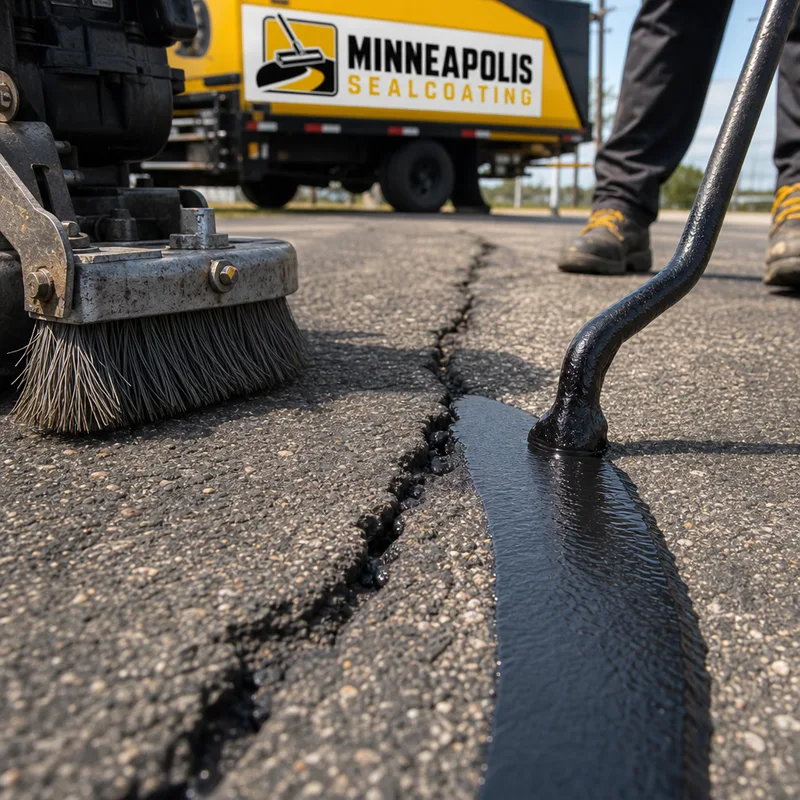
Crack repairs fail when dirt and fines stay in the joint. We focus on cleaning and drying so the material bonds to asphalt instead of debris.
Working cracks and non-working cracks should not be treated the same. We match the product and application method to the crack type and location.
Neat application matters for Minnesota snow removal. A clean bead reduces snag points for plow blades and helps maintenance crews keep lots tidy.
For driveway crack filling Minneapolis homeowners typically want a simple plan: when to stay off it, how long it cures, and what to do next season. We spell that out.
For commercial pavement crack repair Minneapolis properties often need a written scope by area, priority, and timing so tenants and vendors can plan access.
Driveways in Minneapolis take a different kind of abuse than big lots. You get concentrated turning at the garage apron, drip lines from downspouts, and repeated shovel and plow contact near the street.
Driveway crack repair usually makes sense when cracks are still narrow enough that the surrounding asphalt is stable. If the edges are crumbling or the area feels soft, crack filling alone will not stop the movement underneath.
Here are a few practical signs it is time to schedule asphalt crack filling:
The best time to do crack sealing is when conditions let the repair bond and cure properly. We will recommend a window based on your pavement and the forecast at the time of the visit.
We look at crack pattern, width, and movement indicators, then mark sections for crack filling versus asphalt crack sealing. We also note any areas that likely need patching before sealing.
We clear vegetation, blow out debris, and dry the crack line as needed. Prep is what allows the repair to bond instead of peeling out after the first winter.
We apply the appropriate rubberized or asphalt-compatible crack material at the correct depth and finish. High-traffic areas may be treated differently than low-traffic edges.
You get straightforward guidance on when cars can return, where to route traffic for lots, and what to avoid, like turning tires in place, until the repair sets.
If the surface is due for protective coating or has areas trending toward failure, we outline what to do next and when, so the crack work you just paid for stays protected.
Crack filling in Minneapolis typically ranges from about $250 to $900 for many driveways, while parking lot crack repair often starts around $750 to $2,500+ depending on linear footage and traffic control needs. Small touch-ups can be lower; large, heavily cracked lots can run higher.
Final pricing depends on total crack length and width, crack type (filling vs. crack sealing), preparation required, access and staging, and whether there are failed areas that should be patched first. The exact cost is confirmed after an on-site walk-through and written scope.
Crack filling is typically used for cracks with little movement, while asphalt crack sealing is used for working cracks that expand and contract with temperature and load. In Minneapolis, that flexibility matters because freeze-thaw cycles widen cracks and break rigid repairs loose. We choose the method based on crack type, location, and expected traffic.
Schedule crack sealing when the pavement is dry and the weather allows proper bonding and cure. In practice, many property owners target the warmer, drier parts of the year, but the right day depends on your pavement condition and the forecast. We will confirm timing during the site visit so repairs are not applied over moisture.
Yes, parking lot crack filling can usually be phased with cones and short-term lane closures so businesses can stay accessible. The exact plan depends on traffic patterns, entrances, delivery schedules, and how much crack repair is needed in the drive lanes versus the perimeter.
Many crack repair materials allow traffic back on the same day, but cure time depends on the product used, crack depth, and weather conditions. For driveways, we will give a simple return-to-use window based on the repair approach used on your asphalt.
Yes, cracks are typically repaired before sealcoating so the protective coat is not bridging over open joints. If you are planning both, we coordinate timing so crack filler or sealant cures properly, then the surface gets protected. That sequence improves the look and reduces early failure.
No, crack filling will not solve alligator cracking, potholes, or soft areas caused by base failure. Those conditions usually need patching or removal and replacement of the damaged section first, then crack sealing around the repaired area to help slow new cracking.
Tell us whether you are dealing with a driveway or a parking lot, and we will put together a written plan for crack filling or asphalt crack sealing based on what your pavement actually needs. Minneapolis Sealcoating is located at 2010 E Hennepin Ave, Suite 4, Minneapolis, MN 55413.