
Right repair for the failure
Some damage is surface-level, and some is base failure. We match the repair type to what is actually happening so you are not paying to re-do the same spot.
Serving Minneapolis, Minnesota & surrounding areas
Mon–Fri 8am–6pm · Sat 9am–2pm
Fix potholes, cracks, and failing patches before they turn into trip hazards and bigger asphalt bills. Get a clear scope, straightforward scheduling, and repairs that hold up through Minnesota freeze-thaw.
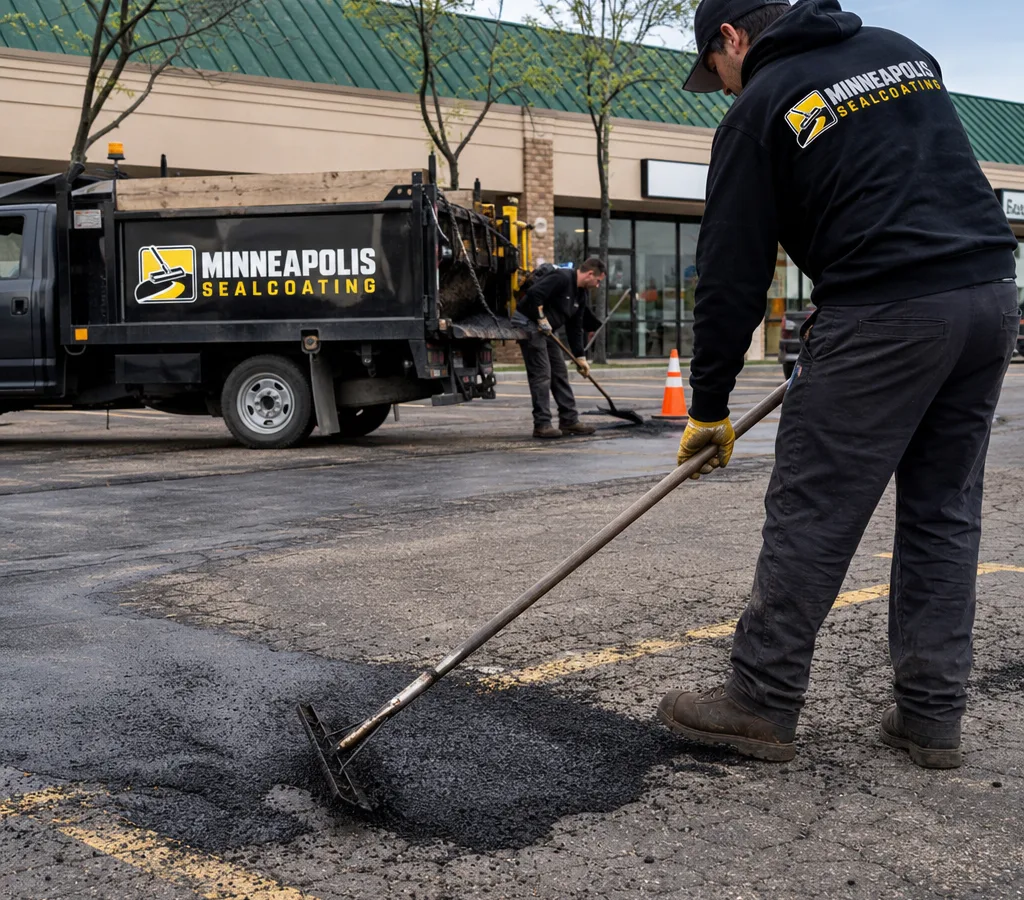
Parking lot repair in Minneapolis usually means targeted asphalt work that restores a safe, smooth driving surface without rebuilding the entire lot. At Minneapolis Sealcoating, we repair the pavement problems that create liability, damage vehicles, and let water get into the base.
Common issues we handle:
These repairs also pair naturally with ongoing asphalt maintenance to slow new cracking and reduce repeated patches.
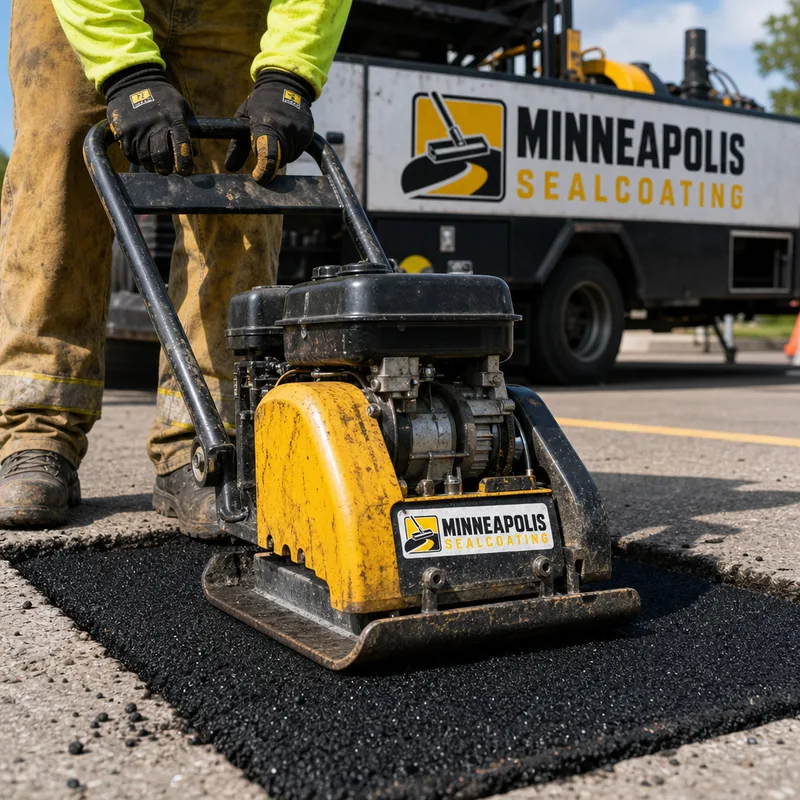
Minnesota's freeze-thaw cycles punish weak spots in pavement. Water gets into cracks, freezes, expands, and breaks the asphalt apart. The fastest way to end up with recurring potholes is to patch the surface while leaving soft base material underneath.
We focus on repairs that address the failure, not just the symptom:
These problems often develop in high-turn areas, loading zones, and busy corridors around Uptown and Downtown. In winter, plows and turning tires work on already-cracked edges, so addressing weak seams early matters.
Some damage is surface-level, and some is base failure. We match the repair type to what is actually happening so you are not paying to re-do the same spot.
Lots still need to function. We plan repair phasing around entrances, drive lanes, tenant access, and deliveries whenever possible.
You get a written scope that calls out repair locations, approximate dimensions, and what is included in prep, patching, and cleanup.
Standing water is a repeat offender. We flag low spots and water paths that can shorten the life of any patch, even a well-built one.
We aim for a patch that blends into existing pavement without high lips that catch plows or create trip points.
We walk the lot or driveway, mark priority failures, and look for causes like water intrusion, base softness, or repeated plow damage at edges.
We outline recommended repairs, expected sequencing, and any access impacts so you can plan around tenants, customers, or facility operations.
When needed, we square up repair boundaries, remove failed asphalt, and address unstable base material before new asphalt is placed.
We install the patch material, compact thoroughly, and confirm the surface is tight and drivable. Proper compaction is a major factor in patch performance.
We confirm the repaired areas, note any nearby cracks or seams worth sealing, and discuss practical next steps for extending pavement life.
Parking lot repair Minneapolis pricing typically runs about $450 to $2,500+ for common patching work, depending on how many areas need repair and whether base problems are present. A small pothole or isolated patch is often on the lower end, while multiple cut-out patches in drive lanes or loading areas can push costs higher.
Final price depends on patch size and depth, hot mix availability and season, access and traffic control, saw-cutting and haul-off, and whether the base must be rebuilt. The exact cost is confirmed after an on-site inspection and written scope.
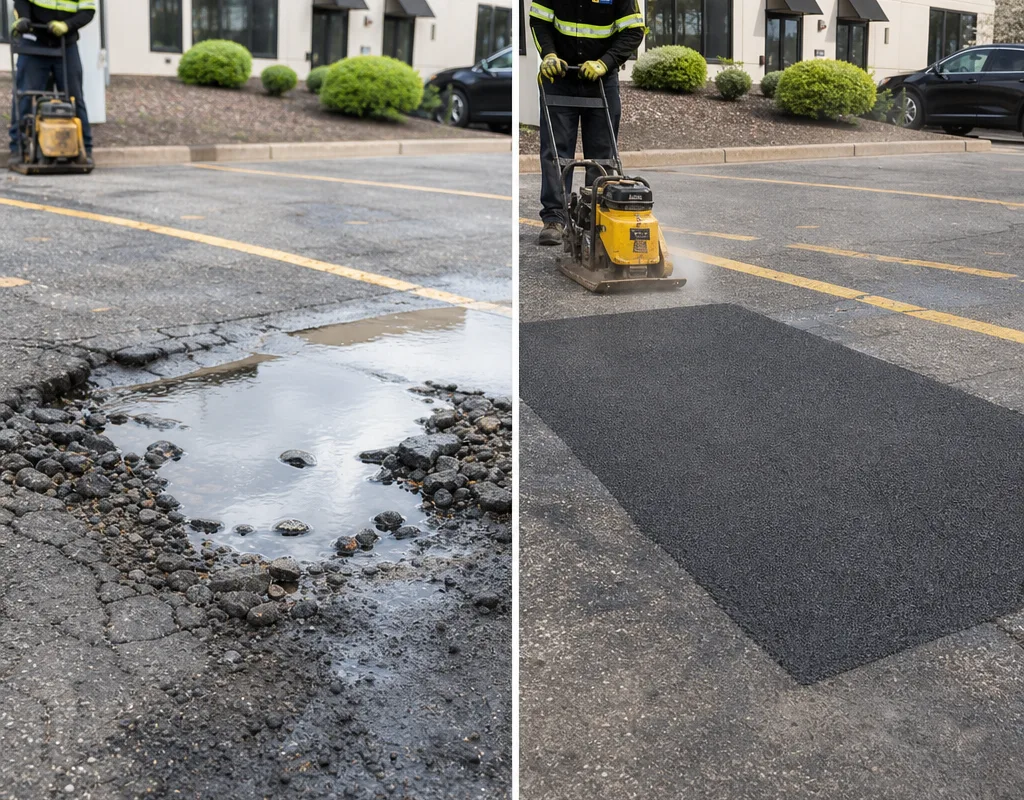
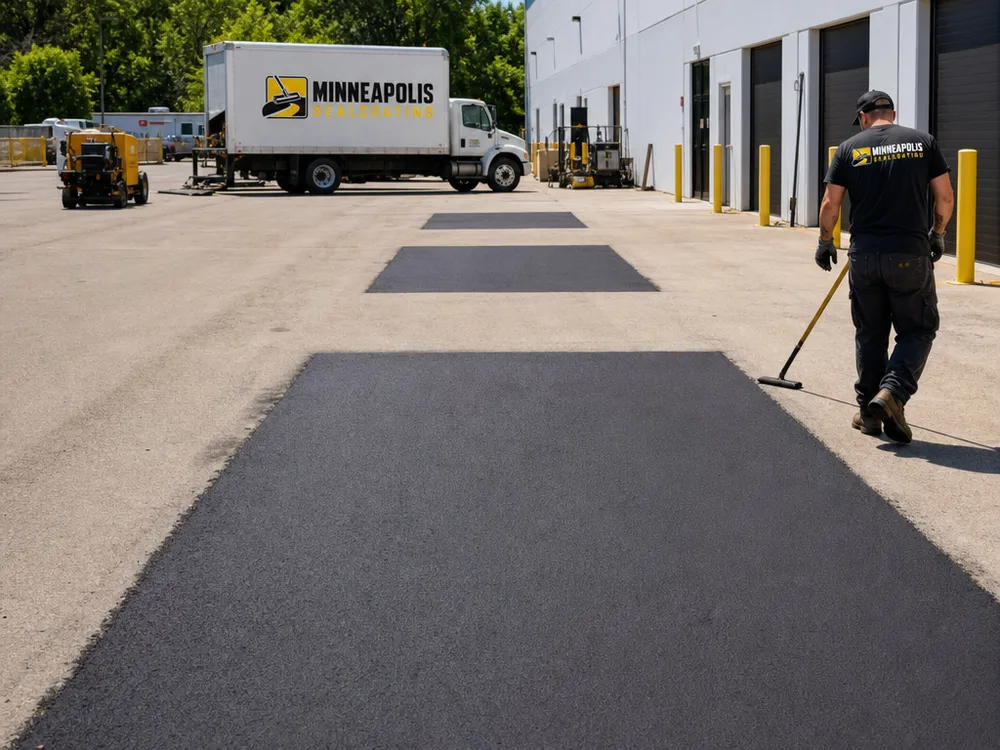
“Our lot had two potholes that kept coming back every winter. They cut out the failed sections, rebuilt the base where it was soft, and patched it flush. The repaired spots stayed solid through the next thaw.”
“We needed patching done without shutting down access for tenants. The crew staged the work so we could keep one entrance open, and the finished patches didn't leave edges that catch plow blades.”
Yes, but the best repair method depends on temperature, moisture, and traffic needs. Hot mix asphalt performs best when conditions allow, while cold patch can be used as a temporary measure to reduce hazards until a permanent repair can be scheduled when the pavement and base are suitable.
A surface patch addresses top-layer wear, while a full-depth patch removes failed asphalt and repairs the base before new asphalt is installed. If you have alligator cracking, sinking, or recurring potholes in the same spot, full-depth asphalt patching is usually the durable option.
If damage is isolated to a few areas, patching often makes sense; if cracking, raveling, and base failures are widespread, you may be better served with a broader repair plan. During a site visit we can map the failures and explain which areas are candidates for patching versus more extensive pavement repair.
Yes. Driveway failures commonly show up at the street apron from plow impact and turning loads, and in wheel paths where the base has weakened. We evaluate whether the area needs a cut-out patch, edge rebuilding, or a larger section repair to stop the problem from spreading.
Many asphalt patch repairs can be opened to traffic the same day once they are compacted and cooled, but timing depends on patch size, air temperature, and how the area is used. For busy lots, we plan staging so you can keep access while repairs cure.
New asphalt is usually darker at first and then weathers to blend in over time. If appearance consistency is important for your property, we can talk through repair layout, edge finishing, and whether a broader surface treatment later makes sense for uniform color.
If your lot or driveway is developing potholes, cracking, or broken edges, Minneapolis Sealcoating can inspect the problem areas and provide a written scope with practical repair options. Our shop is based at 2010 E Hennepin Ave, Suite 4 in Minneapolis, so scheduling and follow-through stay straightforward.